


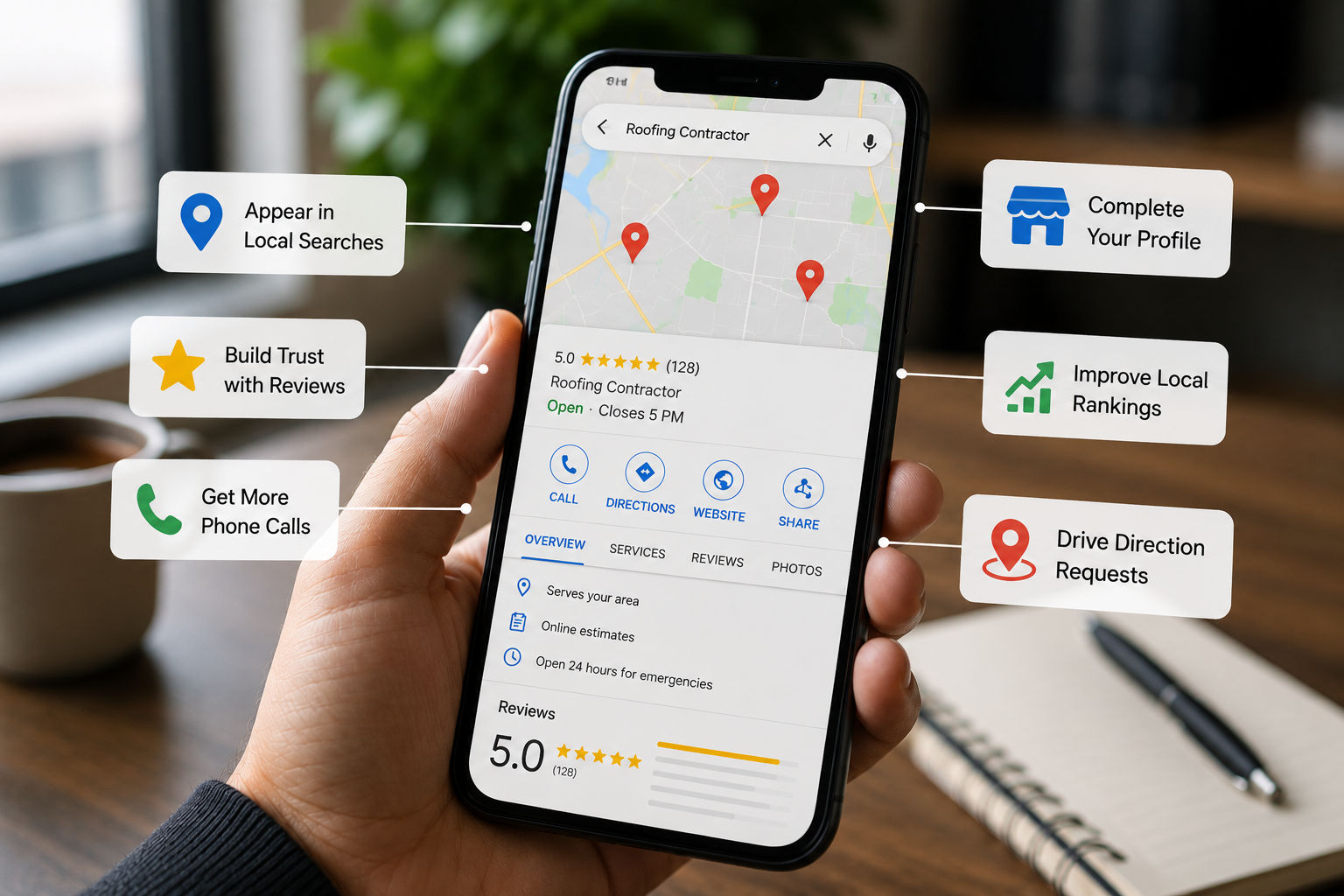
If your phone is not ringing from Google Maps, you do not have a traffic problem as much as a visibility and conversion problem. A strong google maps lead generation guide starts with that reality. For most service businesses, professional firms, and local clinics, the map pack is where buying intent shows up first. People search when they need a roofer, dentist, lawyer, plumber, or HVAC company now – not someday.
That is why Google Maps matters so much. It puts your business in front of people who are already looking for help in your area. But showing up is only part of the job. Real lead generation happens when your Google Business Profile, reviews, local SEO signals, and website all work together to turn visibility into calls, direction requests, form fills, and booked appointments.
Why Google Maps leads are different
Maps traffic usually carries stronger intent than general website traffic. A person searching for “emergency plumber near me” or “best divorce lawyer in Shreveport” is not browsing casually. They are comparing providers and making a decision soon. That makes Google Maps one of the highest-leverage local marketing channels available.
It also creates a different kind of competition. On a normal search results page, businesses fight for organic rankings, paid ads, and attention. On Maps, the decision is often compressed into a small set of listings. If you are in the top results with solid reviews, a clear service category, and a strong profile, you can capture leads without needing the user to study ten different pages.
The trade-off is that Maps is not passive. Rankings shift based on relevance, distance, and prominence. Reviews change. Competitors optimize. Spam listings still exist in some markets. If you want consistent lead flow, you need a process, not a one-time setup.
Google Maps lead generation guide: the foundation
The first step is a fully built and verified Google Business Profile. That sounds basic, but many local businesses leave key fields unfinished or inconsistent. Your business name, primary category, secondary categories, service areas, phone number, hours, website, and business description all influence how clearly Google understands your offering.
Category selection matters more than most owners realize. If you are an HVAC contractor, using the most accurate primary category gives Google a direct signal about what searches you should appear for. The same goes for dentists, personal injury attorneys, landscapers, and plumbers. A close category is not always good enough. In local search, precision wins.
Photos also play a larger role than many businesses expect. Strong images of your team, office, vehicles, completed work, and signage improve trust and can increase engagement. People want proof that you are established, local, and real. On Maps, credibility is often judged in seconds.
Then there is consistency. Your website, business listings, and Google Business Profile should match on core details. If your business name is written three different ways online or your phone number varies by directory, you make it harder for Google to trust the data.
Ranking is only half the equation
A lot of businesses treat Google Maps as an SEO play only. They focus on getting into the top three and stop there. That is a mistake. Ranking without conversion is expensive in a different way – you are losing opportunities you already earned.
When someone lands on your profile, they are asking a few practical questions fast. Do you serve my area? Can I trust you? Are you active? Are you highly rated? Is it easy to contact you? If those answers are not obvious, your listing can still lose leads even with good visibility.
This is where review strategy, profile completeness, messaging, and website experience start to matter. A business with fewer reviews but stronger review quality and a cleaner profile can outperform a better-ranked competitor over time because more searchers choose them.
Reviews are a lead generation asset, not just a reputation metric
In any useful google maps lead generation guide, reviews need serious attention. They influence both ranking and conversion. More importantly, they shape whether a prospect trusts you enough to call.
The best review strategy is steady, recent, and operationally simple. Asking only once a quarter is not enough. Asking every satisfied customer in a consistent way is better. Service businesses that build review requests into their job completion process usually outperform businesses that rely on memory or occasional follow-up.
Review quality matters too. A five-star review that mentions your service, location, responsiveness, and results sends a stronger signal than a generic “great company.” For example, an HVAC company in Tyler benefits when customers mention AC repair, same-day service, and professionalism. Those details help both users and search engines connect your business to real local demand.
Responding to reviews is part of the process. It shows activity, professionalism, and customer care. It also gives you another chance to reinforce service relevance naturally. Responses should sound human and specific, not copied and pasted.
Your website still matters for Maps performance
Many owners assume Google Maps leads happen entirely inside Google. In reality, your website supports Maps rankings and conversions more than it gets credit for. A weak website can limit the performance of an otherwise solid profile.
Google uses website signals to understand your services, locations, credibility, and authority. If your site has thin content, poor mobile performance, no local service pages, or weak calls to action, it becomes harder to compete. This is especially true in crowded verticals like legal, dental, roofing, and home services.
A conversion-focused website helps in two ways. First, it strengthens your local SEO signals with clear service and city relevance. Second, it captures the lead once someone clicks through. Mobile usability is critical here because many Maps searches happen on phones. If users cannot call, request service, or understand your offer quickly, lead volume suffers.
Posts, Q&A, and profile activity
Profile activity is not the biggest ranking factor, but it can improve engagement and trust. Posting updates, service highlights, promotions, or seasonal reminders gives searchers more reasons to interact with your listing. It also signals that your business is active.
The Q&A section deserves more attention than it usually gets. Prospects often want quick answers about service areas, insurance, appointment availability, financing, or emergency response. If those answers are visible in your profile, hesitation drops.
This is one of those areas where the right level of effort depends on your market. A highly competitive legal or medical category may require tighter profile management than a niche B2B service in a smaller city. The point is not to overdo activity. The point is to remove friction for people ready to contact you.
Tracking what actually turns into revenue
Lead generation without tracking turns into guesswork fast. If you want to know whether Google Maps is paying off, you need more than impressions and profile views. You need to measure calls, form submissions, direction requests, booked jobs, close rates, and customer acquisition cost.
This matters because not all leads are equal. A profile can generate a lot of low-quality activity if your categories, service areas, or messaging are too broad. On the other hand, a lower volume of highly qualified calls may produce far better return. Business owners should judge Maps performance by revenue potential, not vanity metrics.
For local service businesses, this often means tying Google Business Profile performance to call tracking, CRM follow-up, and service-area reporting. When you know which locations, services, and search behaviors produce real customers, budget decisions get easier.
Common reasons Google Maps lead generation stalls
The most common problems are usually fixable. Sometimes the profile is under-optimized. Sometimes reviews are too sparse or too old. Sometimes the website is too slow, too generic, or too hard to use on mobile. In other cases, the issue is strategic – the business is trying to rank broadly instead of building authority in the services and cities that matter most.
There are also cases where expectations need calibration. A newer business in a crowded metro may not jump into top positions overnight, especially against established competitors with years of review history and stronger local authority. That does not mean Maps is not working. It means the plan needs to match the market.
This is where a practical, numbers-first approach helps. Instead of chasing visibility everywhere, focus on the services with the highest margin, the cities with the best close rates, and the profile improvements most likely to increase action.
For businesses in East Texas and North Louisiana, that often means thinking locally, not generically. Your positioning in Longview, Tyler, Shreveport, or surrounding service areas should reflect how people actually search and choose providers in those markets. That is where agencies like Capstone Marketing tend to create an advantage – by tying local search work to lead quality, conversion performance, and measurable growth instead of treating Maps as a box-checking task.
The best results from Google Maps usually come from consistent execution over time. Clean profile data, better reviews, stronger local pages, faster mobile experience, and smarter tracking may not feel flashy, but they are what turn Maps visibility into booked business. If you want more leads from local search, start by making it easier for the right customer to find you, trust you, and contact you without hesitation.