


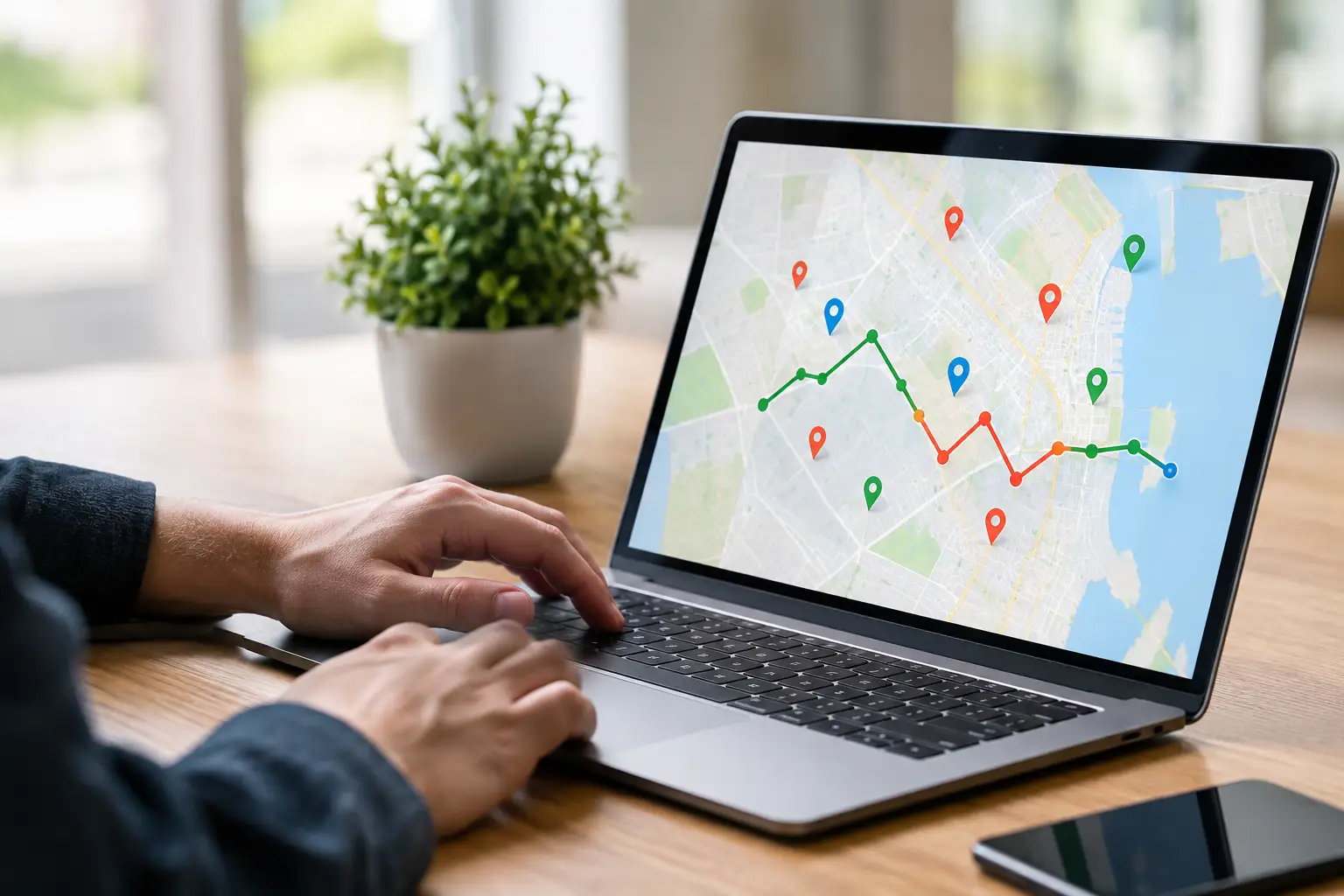
A roofing company can appear in the top three Google Maps results on Monday, drop to seventh on Wednesday, and be back near the top the following week. Map ranking fluctuations are frustrating when calls are on the line, but movement does not automatically mean your local SEO strategy has failed. The real question is whether the change is normal variation or a signal that visibility, leads, and revenue are at risk.
For service businesses in Shreveport, Bossier City, Tyler, Longview, and surrounding markets, Google Maps visibility can drive a meaningful share of high-intent calls. A customer searching for an emergency plumber, a local attorney, or an HVAC repair company is often ready to contact someone now. That makes it essential to understand what ranking movement means before reacting with unnecessary changes.
Why map ranking fluctuations are normal
Google Maps results are not a fixed leaderboard. They are personalized, location-sensitive, and constantly recalculated. Two people searching the same phrase from different neighborhoods may see different businesses in different positions. A user in South Shreveport may receive a different local pack than someone searching from Bossier City, even when both type “roof repair near me.”
Google also weighs more than one factor. The traditional framework is relevance, distance, and prominence. Relevance is how well your Google Business Profile, website, services, and reviews match the search. Distance is how close the searcher is to your location or service area. Prominence reflects the confidence Google has in your business, based on factors such as review quality, online references, website authority, and overall market presence.
Because these signals change, rankings change. A new review can help. A competitor with a stronger website or a nearby physical location can move ahead. Google may also test different results based on user behavior. Small shifts from one scan to the next are common, particularly outside the immediate area around your business.
The first mistake is treating one ranking check as a final verdict. A more useful view looks at trends across multiple locations, multiple search terms, and enough time to separate a temporary dip from a sustained decline.
The ranking changes that deserve attention
Not every fluctuation requires action. If your business moves between positions three and five for a keyword in one part of town while calls and direction requests remain stable, there may be little to fix. Maps results are naturally volatile near the edge of the local pack.
A sustained drop across your core service area is different. Pay closer attention when rankings decline for the services that generate your best leads, when the drop appears in several neighborhoods, or when it is paired with lower calls, website visits, direction requests, or form submissions.
The same applies if several competitors begin outranking you consistently. That may point to a gap in your profile, reviews, local authority, service-page quality, or proximity advantage. It could also indicate a Google update or a change in the competitive landscape, such as a new office opening closer to a high-value customer area.
Rankings matter, but they are not the final score. A business that ranks fourth and generates 30 qualified calls is in a better position than one ranking first for low-value searches that do not convert. Track map visibility alongside lead quality, booked jobs, customer acquisition cost, and revenue.
Common causes of a drop in Google Maps visibility
Changes to your Google Business Profile
Your Google Business Profile is one of the most important local ranking assets you control. Incorrect hours, an outdated phone number, an accidental category change, duplicate listings, or an unresolved verification issue can affect visibility and customer trust.
Categories deserve particular care. Your primary category should describe the main service your business provides, not every service you offer. Secondary categories can support related work, but adding irrelevant categories to chase rankings usually creates confusion rather than better results.
Profile edits can also trigger a review process. If rankings shift shortly after updating your name, address, category, or service area, give Google time to process the changes. Avoid repeatedly changing fields in response to a few days of movement.
Review velocity and reputation signals
Reviews do more than influence whether a customer calls. They also help Google understand that a business is active, credible, and serving real customers. A competitor that steadily earns detailed, recent reviews may gain ground, even if your total review count remains higher.
The goal is not to force a sudden surge of reviews or use scripted language. Build a repeatable process that asks satisfied customers at the right time, makes leaving a review easy, and encourages honest feedback. For a dentist, that may be after a successful appointment. For a landscaper or roofer, it may be after the project is complete and the customer sees the result.
Responding to reviews will not instantly move a listing to the top, but it supports trust and shows that the business is engaged. It also gives you useful language from customers that can reveal which services and locations matter most.
Competitor activity and proximity
Local search is competitive by design. If another HVAC company opens an office closer to a dense residential area, it may outrank you for searches from that area despite having fewer reviews. There is no amount of profile editing that fully eliminates a genuine distance disadvantage.
That does not mean the market is lost. Stronger relevance and prominence can expand the area where you compete, while paid local advertising can help fill gaps where organic map visibility is harder to win. The right answer depends on the value of that territory and the cost to acquire a customer there.
Website and local relevance gaps
Google Maps and your website are connected. A weak, slow, or generic website can limit how confidently Google associates your business with specific services and markets. A plumbing company with one broad page for every service is less likely to build clear relevance than a company with useful pages for drain cleaning, water heater repair, leak detection, and the locations it actually serves.
Mobile performance matters because many map searches happen on a phone. If a prospect taps through from your profile and encounters a slow site, unclear service information, or no easy way to call, ranking alone will not produce the return you need.
Google updates, spam cleanup, and technical issues
Google periodically changes how it evaluates local results. It may also remove spam listings, filter duplicates, adjust how it interprets business names, or change the geographic area where a business is visible. These events can create sudden movement across an entire market.
Before assuming an update is the cause, check the basics. Confirm your listing is live, verified, accurate, and free from policy problems. Review recent profile edits, website changes, lost pages, tracking errors, and review trends. Technical issues are often more actionable than speculation.
How to monitor local rankings without chasing noise
A practical reporting process starts with the search terms that lead to revenue. An attorney may track practice-area searches, while a plumber may focus on emergency repair, water heater, and drain-related searches. Ranking for a broad term is less valuable if it does not bring qualified work.
Monitor those terms across the neighborhoods and cities where you want to grow. Grid-based local rank tracking is more useful than searching from your own office because it shows how visibility changes by location. Pair that data with Google Business Profile performance, website leads, call tracking, and booked-job data.
Review results monthly for strategic decisions and weekly when diagnosing a noticeable drop. Daily checks can be useful during a problem, but they often create false alarms. The goal is to identify a pattern, not react to every position change.
When rankings fall, document the timing. Compare the decline with profile updates, review activity, competitor changes, website launches, and lead performance. That creates a clear diagnosis instead of a collection of guesses.
What to do when rankings decline
Start by protecting the fundamentals. Audit your Google Business Profile for accurate business information, appropriate categories, complete services, current photos, and no duplicate or suspended listings. Then review your website for service relevance, mobile speed, clear calls to action, and pages that support the markets you serve.
Next, assess your competitive position honestly. Are competitors earning more recent reviews? Do they have better service pages, stronger local references, or an office closer to the customer base? Fix the gaps that affect leads first instead of pursuing cosmetic changes that look productive but do not improve performance.
Do not resort to keyword stuffing in your business name, fake locations, review gating, or purchased reviews. Those tactics may create temporary movement, but they expose the business to profile suspension and long-term trust problems. Local visibility is more valuable when it is built on assets you actually own: a credible profile, real customer feedback, a useful website, and a disciplined lead-generation strategy.
A stable local presence is not about holding the same map position every day. It is about building enough relevance, trust, and conversion strength that normal movement does not derail your pipeline. Watch the numbers that matter, correct real weaknesses, and make every marketing decision accountable to qualified leads and revenue.